It is time for another blog post and I have decided to do something a little different. I would like to share with you the adventure I experienced when I had the opportunity to live in Ecuador, South America for a month. This will be a 2 part series with the first one focused mainly on the nature aspect and the next one will be about the pretty cool places and sites I saw. They are going to be somewhat lengthy posts but my hope is to spark an interest in you to seek adventure and to get out and live! Going to a new place, and even new culture is a little intimidating for sure, but it is also a fun and learning experience that for me, I am thankful for and it was life changing.
In the summer of 2009, I flew down to Ecuador, South America to spend roughly a month with some friends whom are missionaries there. I pretty much hung out in the Andean Mountains; the Cloud Rain Forest. At the time, we were near a small town outside of Quito, pretty much in the middle of nowhere in the rainforest; a naturalist's paradise!
Cloud Forest
View I got to see everyday!
The first week I was there was pretty crazy but in a good way. I got to hangout with another group that was visiting and doing a missions trip. We went out into La Armenia and did a few service projects for a local school. We also got to hangout with some kids at another school and played soccer and Frisbee with them. One day, we did some outreach projects in the town of Mindo and then had the opportunity to go zip-lining up in the canopy! It was quite an experience! Sadly, I did not take any photos :(
Outreach. Photo by ME.
During the month I was there, I certainly got to explore and see some pretty neat stuff, sites, and wildlife and plants. The couple that I stayed with knew I love animals and often went out into the forest to help me find stuff. They even caught a snake some time before I arrived and they saved it for me.
Tropical Whipsnake. Photo by ME.
Ground Snake. Photo by ME.
Flock of Parrots. Photo by ME.
So getting to explore the rainforest was something that I had dreamed about doing since I was a kid, and so, this experience was a pretty big deal for me. Any how, one morning, one of my friends' and I were walking around and encountered a bird that had flown into the window and had knocked itself out; it did live and was eventually released.
Tawny-Bellied Hermit. Photo by ME.
I could go on with the neat stuff I saw exploring just the area I was staying at. However, I need to move on in this post. Though I will quickly mention that one day, I got to see a Basilisk Lizard run across a dirt road on its hind legs! That was cool and sort of mind blowing too; they are known for running on their hind legs on water for a short distance. I never knew they could perform such a feat on land too. Sadly, that event was not captured on camera, but I did get a photo of the lizard.
Basilisk Lizard.
As you can imagine, being in a tropical environment, there are going to be a lot of insects. Well, this region was no exception; there were a lot of insects. One really interesting species of insect I encountered was the leaf-cutter ant. Leaf-Cutter Ants were running all over the place. I had the chance to see them running around, carrying leaf pieces they gathered from various plants. Another neat thing was they had a pretty insane trail going on and I have to say after this moment, I have been rather fascinated by leaf-cutter ants since.
Leaf-Cutter Ant collecting a leaf
Leaf-Cutter Ant Trail
So, yeah, that was cool. Here are few other pictures of some neat stuff :)
Waterfall
Me exploring a river. Photo by Miguel Labrador
Rain Frog
An Orchid of some kind.
So, exploring the tropics is sure to enlighten a naturalist and yield many learning and jaw-dropping moments. On many occasions I got to explore some rivers and see different things. There is a really cool tree I had the opportunity to see and I feel pretty fortunate to have seen it. However, I honestly forget what the actual name of the tree is, one the names it is called is "Blood of The Dragon", a pretty sweet name in my opinion.
"Blood of The Dragon" Tree
The "blood" sap.
As you can see, the tree is called "Blood of The Dragon" due to the sap looks like blood. The neat thing is, the sap can be used to treat insect bites, or least from what I understand.
A really cool thing that occurred while I was in Ecuador is that many of the locals heard about me wanting to find some critters; snakes in particular and on a few occasions they would bring my friends a snake, they had captured or came across, so I could see it.
Green Sipo
Both of us "Smiling"
Pretty cool, huh? One evening I was walking around and I got to see a beautiful sunset. The scenery there overall was spectacular!
Beautiful Sunset.
I tell ya, the Cloud Forest is pretty cool! I was pretty much in the middle of the Andes. There was one day I had the opportunity to explore Quito, Ecuador and checked out the equator but I shall tell more of that in my next post. Here is a pretty cool bird that I saw:
Black-Tailed
Trainbearer
So now, I am going to post a few more animal photos and will talk a little bit about them, but mostly it will just be photos and then I will go more into some plants and scenery ( thought not all, as I am saving some really good ones for the next post) aspects of the nature experiences of my trip.
Praying Mantis with a Hood.
Forest Racer
Butterflies were everywhere!
Ok, so on one occasion, I had the opportunity to hangout in a town called Pacto, I will talk more of it the next post. There, I had the opportunity to see and check out some rather large insects. They are male and female Hercules Beetles as well as a Neptune Beetle. The size of them astounded me for sure, and it still does. They were caught by a local woman who sells them.
Neptune Beetle
Hercules Beetle
How big they were!
Yeah, they are huge! lol. The one beetle is perched on sugar cane if you want to know what that object is.
So, that pretty much does it for the animal side of things, there are so much more photos and such I sadly have to leave out. but all of my photos are posted on my facebook page if you want to see more.
Now, I will spend some more time on plants :)
This plant below, I wish I knew what it is, but I do not know my plants. I do know that these flowers produce hallucinogens and will make you high if you smell them too long. And no, I did not test it, lol
Photo by Miguel Labrador
Along a river
Pod of seeds of some kind
The next few plant photos are of fruits and coffee! Goods that people use!
Coffee Beans and Tree
Limes
Oranges
So, coffee, a lot of people are really into it. It is commonly grown in the Andes and throughout the Latin Americas as a whole.
Ok, so if you are still reading at this point, thank you for bearing with this lengthy post. I will say that if you ever have a chance to have an adventure in the tropics or in another country in general, I would say go for it! It is an amazing experience! I will end this post with a few scenery photos. Be sure to read my post next month to learn more about some of the other aspects of Ecuador's Andean Mountains I got to experience.
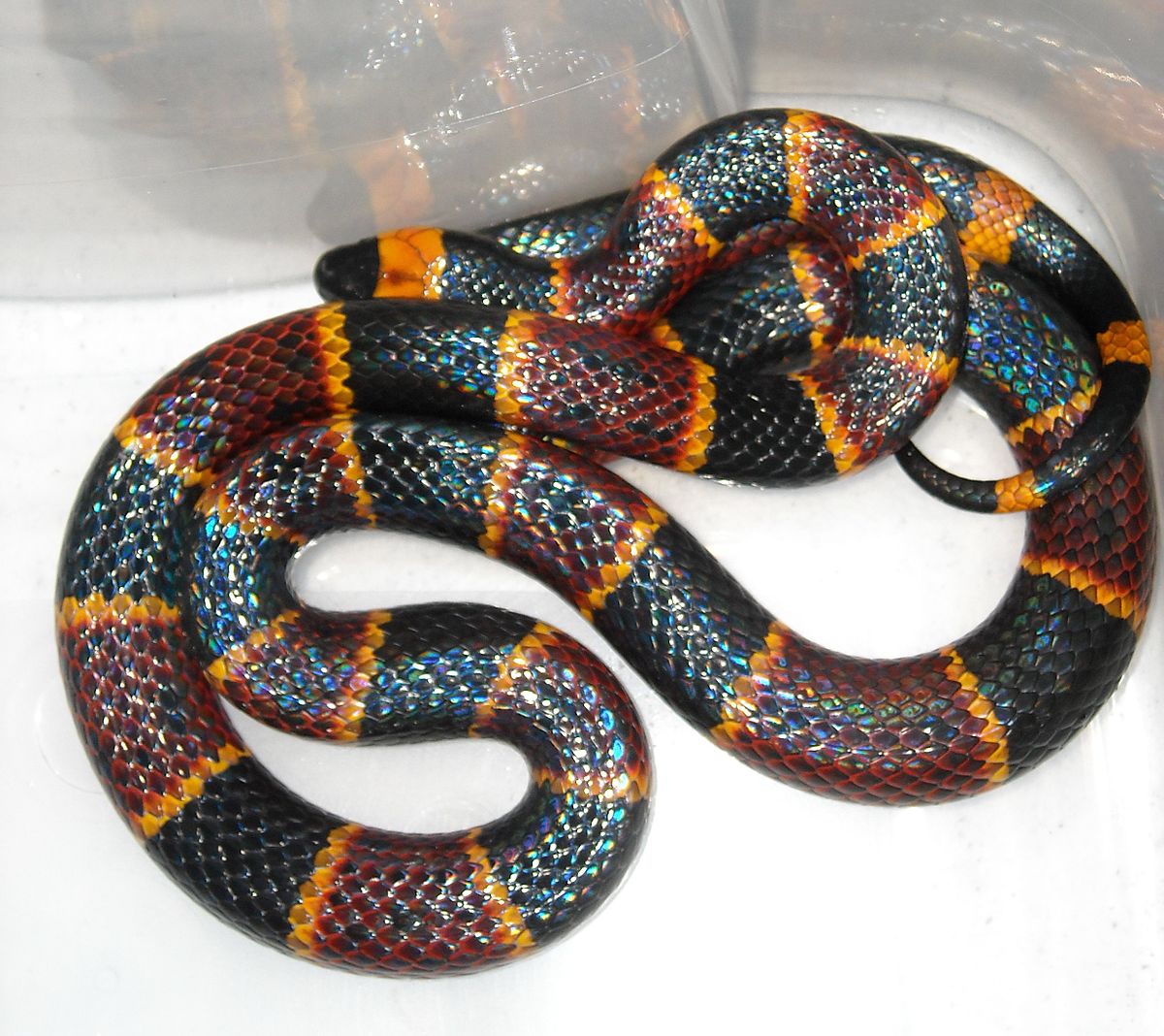
At one point in time of your life, you may have heard of the poem "Red touch yellow, kill a fellow. Red touch black, friend of jack." Well, this is the snake it was talking about. If you look closely, you will see *Red bands touching the yellow bands which is a big clue in identifying an Eastern Coral Snake. I will note that this poem ONLY applies in America. In the Latin Americas, Asia, and wherever else coral snakes are found, they can be other patterns and colors. They can even be the " red touch black, friend of jack" so, I would not approach a brightly colored snake if you are in another country and do not know your snakes very well* In addition to the bands, Eastern Coral Snakes also have a *black face, which is another clue in identifying it.* In regards to the eyes, yes they do have round pupils, unlike the other venomous snakes in NC, but I would not consider that a good clue to go with if you are looking at the snake from a distance.
Coral Snake. Photo from Internet.
Eastern Coral Snakes' habitats are according to Peterson Field Guide: Reptiles and Amphibians: Eastern/Central North America written by Roger Conant and Joseph T. Collins " ...pine woods, and open, dry, or sandy areas...pond and lake borders and in hammocks." They do also like places with wiregrass. Coral snakes eat a variety of things though they seem to mainly go for other snakes and lizards. Coral Snakes are of course, venomous, and they have neurotoxin venom which attacks the nervous system. A bite from these snakes can be very serious, so one should seek medical attention if bitten by one. However, bites from these guys, especially here in NC, are quite rare.
Coral Snake Range in NC. Photo from herpsofnc.org
In North Carolina, Coral Snakes are rare and are listed as Endangered. I am not really sure why Coral Snakes are endangered, but they are super secretive and spend a lot of time underground. That may be why they are not seen very often. There is still much to be learned about these snakes.
Coral Snake. Photo from Internet.
So now that we have learned a little bit about the coral snake, lets learn about the 2 snakes it is often said mimics the coral snake: First up is the Scarlet Kingsnake.
Photo from Internet.
As you can see by the photo, it would be easy to confuse this snake with a coral; bright red colors and all. If you remember from early on in this blog, I talked about the face of the coral snake being black, well, if you look closely you will see that *Scarlet Kingsnakes have quite a bit of red coloration on their faces. That is a clue in identifying them, though you have to get somewhat close* They are the "red touch black, friend of jack." *Their red bands touch their black bands*
I will note here that *The poem only works for North America Coral Snakes. Many coral snakes outside of the US will sometimes have the red touch black. Do not go by the poem outside the US* Scarlet Kingsnakes are according to Snakes of the Southeast by Whit Gibbons and Mike Dorcas, "most abundant in forests, where they often hide beneath loose bark of dead trees, especially pines."
As the name might make you think of kingsnakes that eat other snakes, these guys will eat other small snakes. They will eat lizards as well as small rodents if the opportunity presents itself in addition to the other snakes.
In regards to the whereabouts of these snakes in NC, they are found primarily in the Coastal Plain and Sandhills, but have been found in the Piedmont, though they are quite rare.
Scarlet Kingsnake Range in NC. Photo from herpsofnc.org
Me with a Scarlet Kingsnake
Photo by ME
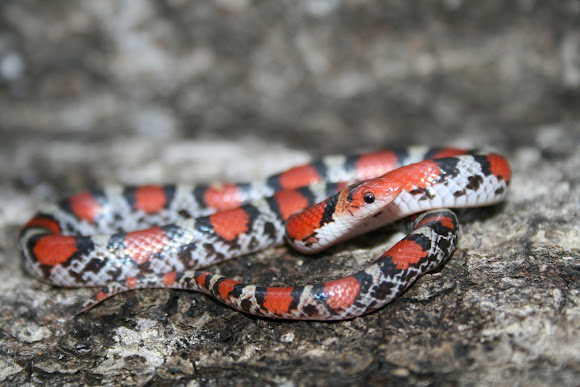
The other snake that mimics the coral snake is the Scarlet Snake. These snakes can be identified by the * "red blotches enclosed in black margins and separated by white, yellow, or pale gray interspaces." Amphibians and Reptiles of the Carolinas and Virgina. * So, they are rather distinctive snakes. Again, if you look closely, the scarlet snake has a * a good deal of red on the face*.
Scarlet Snake. Photo from Internet.
These snakes typically are found in sandy habitats and sandy areas with pine trees, where they like to burrow. The term for snakes that like to dig and burrow is fossorial. Snakes Of The Southeast.
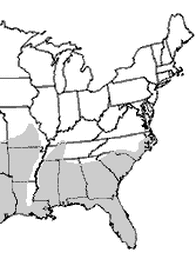
Scarlet snakes eat primarily other, small reptiles and amphibians; in particular the eggs. The neat fact is that these little guys will constriction to subdue live prey! In regards to the range on Scarlet Snakes in NC, they are found in the Coastal plain, Sandhills, and even in the Piedmont regions.
Photo from Internet
NC range of Scarlet Snake. Photo from herpsofnc.org
Ok, now that we have learned a little bit about these guys, I first would like to encourage you guys and gals to go and learn more about them and about mimicry. Which is an animal that looks like another. It is interesting! The next thing I am going to do, is test you and see if you can identify the venomous coral snake among the 2 nonvenomous mimics. (No peeking!)
Photo from Internet.
Photo from Internet.
Photo from herpsofnc.org
So, I hope you have learned something about these unique and quite beautiful snakes. I would encourage you to go and learn more about them as they are very cool animals. Again feel free to ask me any questions you might have.
Here is the next part of the series I have been doing on North Carolina's Venomous Snakes. Before getting into the next species' I would like to say that venomous snakes play a very important part of the ecosystem and are quite beneficial to people despite the bites that do occur. These snakes help keep populations of rodents and other animals in check, and are food sources themselves to other animals. In the book Snakes of the Southeast Mike Dorcas and Whit Gibbons says it best when talking about venomous snakes. "Venomous snakes have fangs and venom for capturing prey, not to bite people. Because no venomous snake preys on humans, the only reason they bite humans is in self-defense, and then only as a last resort." Also, there many cases that snake venom is being used in the medical field to treat a lot of different things and gain new insight on how the human body works. I would highly recommend you research it and learn more about it, it is cool!
Now, to talk about Rattlesnakes! Below I put a video ( I did not film it) from You Tube of a Timber Rattlesnake rattling its tail so you can hear what that is like. I think it is pretty cool! *I would not advise approaching a rattlesnake and making attempts to get it to rattle its tail*
In total, there are 3 different species of Rattlesnakes in North Carolina; 2 of which can come in different color variations. *As far as identifying them; the rattle on the tail is the big clue to look for*.
We will begin with the Timber Rattlesnake.
Black-Phased Timber Rattlesnake. Photo by Ray Hopkins
Yellow-Phased Timber Rattlesnake. Photo by Ray Hopkins
Canebrake Phase. Photo by ME.
The Timber Rattlesnake is one of the 2 Rattlesnakes in NC that is varied in color. In the mountains of North Carolina they will either be the black phase or yellow phase like the ones pictured. Once you get into the Timber Rattlesnake's range in the Piedmont and Coastal Plain, they will be what is called the Canebrake phase that is pictured above. In fact, these guys are most often called Canebrake Rattlesnakes by scientists, due to they like to hangout in Canebrake thickets.
Historically, Timbers were found all over the state, but that has long since changed due to habitat loss
Timber/ Canebrake Rattlesnake Range in NC. Photo from herpsofnc.org
They eat primarily rodents but would likely take a bird or some other critter if the opportunity presented itself. They, like all rattlesnakes as well as the copperhead and cottonmouth I have written about, will rely on their pits to sense the heat from the rodent's body. Timbers generally ambush prey and will inject it with venom.
Despite the fear surrounding rattlesnakes, the timber rattlesnake is actually a rather docile snake. According to Amphibians and Reptiles of The Carolinas and Virginia authors Jeffrey C. Bean, Alvin L. Braswell, et al. write: "When discovered, these rattlers usually remain still or attempt to escape. They will, however, vigorously defend themselves when provoked." Basically, if you leave the snake alone, it will leave you alone. They rely heavily on camouflage to hide from predators and prey a like. A bite from these guys can be very serious, so it is recommended to get medical attention.
A fun little fact I will share with you about these guys is that they, like all pit vipers, give live-birth rather than lay eggs.
Ok, so the next snake is the Carolina Pygmy Rattlesnake
As you could probably tell from the pictures, Pygmy Rattlesnakes are small. The authors of Amphibians and Reptiles of The Carolinas and Virginia write that 26 inches is the longest they can get, generally. Being as small as they are, they are considered to be the "least" venomous snake of NC's 6 species that are venomous. However, a bite can still cause a great deal of discomfort and it is highly recommended that a bite should get medical attention. That being said, like other snakes, they will only resort to biting if they have no way of escaping.
Photo Taken From Internet.
Pygmies are rather brilliantly colored animals that vary from the
gray coloration to the brick red color. In North Carolina, they
primarily dwell in the coastal plain and sandhills but do also occur in
one location or so in the mountains. They like to hang around bodies of
water in pine forests, sandhills, and mixed hardwood forests among other
places. Snakes of The Southeast.
Photo from Internet.
By the looks of things, you are probably wondering what would these little guys eat? Well, they eat small critters such as: lizards, small rodents, small amphibians, and other small critters.
The fun fact I will share with you is that they do have a rattle, but it is tiny and can be difficult to hear.
Pygmy Rattlesnake Range. Photo from Internet
Our final Rattlesnake that we will be learning about, is sadly not doing well, and is on the verge of extinction in the state of NC. It is a truly unappreciated, amazing snake with lots of fear around it. I hope this blog will help you learn how cool, not only this species is, but all of NC's rattlesnakes.
The Eastern Diamondback Rattlesnake has been brought to the verge of extinction in NC due to habitat loss and being killed. They can be quite large snakes, getting up to 78 inches. Amphibians and Reptiles of The Carolinas and Virginia.
Photo Taken From Internet
Photo by Me
The Eastern Diamondback Rattlesnake can be quite large as I have written before. An adult can take on and eat something as large as a rabbit! Like the other rattlesnakes, they have pits. They will ambush their prey and inject it with venom. Diamondbacks will eat other rodents too when they get the opportunity.
They spend a good deal of their time hanging out near and in stump holes and similar hiding places in forests, fields with lots of brush, and similar habitats.
In NC, they are found in the coastal plain.
Eastern Diamondback Rattlesnake Range in NC. Photo from herpsofnc.org
Diamondbacks are rare in NC, so it is not likely to be encountered while your out in the woods on a hike. When they are encountered, they could "quickly assume a defensive posture: body coiled, rattle erect and buzzing, neck flexed with head directly facing the source of annoyance." Amphibians and Reptiles of The Carolinas and Virginia. These guys are thought to be one of the most dangerous snakes in the Southeast, so caution should be shown when encountered like any other animal. Bites from these snakes are very serious and medical attention should be sought.
Fun fact for these awesome animals is that they have been seen swimming in salt water.
Well, I hope you have learned something about Rattlesnakes. They are very cool creatures that want to be left alone to do their own thing. I am really fascinated by their rattles and the sound they make. By the way they find, capture, and eat their prey. As well, as how well they can blend in to their environment. I think the fact they are sort of chunky, heavy animals is pretty neat too. They are something that you do not need to fear. If you respect them like you would a car or a knife in the kitchen when you are preparing a meal or even eating a meal, you will be fine. Once again, feel free to ask me any questions you may have.
A big thanks to my friend Ray Hopkins for the use of the Timber Rattlesnake photos. Rachel is passionate herper and of course, an excellent photographer.