Wednesday, April 13, 2016

The Common Snapping Turtle

Hello Friends.

It is that time again for a blog!

In this blog, we will learn about the Common Snapping Turtle! They are pretty neat animals, so let's get started...

Common Snapping Turtle. Photo by ME. 

The common snapping turtle is probably one of the more well recognized and known species of turtle other than, perhaps the box turtle and the red-eared slider. These turtles can be big and can have an attitude. According to Turtles of the Southeast, authors Kurt Buhlmann, Tracey Tuberville, and Whit Gibbons writes: "Snapping turtles have dark gray to black shells and appendages of the same monotone color...Their large head, strong jaws, sharp beak, and powerful claws give them a formidable appearance that is well deserved."


Snapping turtle skull. Photo by ME. 


As I said, these turtles can be big. In fact, the North Carolina state record for the biggest snapping turtle is one that weighed 61 pounds when it was captured!

These animals are mostly aquatic animals, but they do leave the water from time to time. According to Amphibians and Reptiles of the Carolinas and Virginia authors Jeffrey C. Beane, Alvin L. Braswell, Joseph C. Mitchell, William M. Palmer, and Julian R. Harrison III writes: "In early spring, adults frequently wander from one body of water to another. In late spring or early summer, females lay 10 to 83 ( usually about 25) eggs per clutch in a shallow nest, sometimes a considerable distance from water." So, if you ever wondered why you see snapping turtles crossing roads, or just walking about out of water, that is why.

Snapping turtles sort of bask in the sun, but not quite like how other aquatic turtles do. Snappers can sometimes be seen floating on some vegetation or just hanging out near the top of the lake or the like.

In regards to habitat, well, snapping turtles are found in any places with a suitable water source and plenty of food items. Ponds, lakes, swamps, Carolina bays, among others. They will enter brackish water too (Amphibians and Reptiles of the Carolinas and Virginia). I have seen one in brackish water, at the Bodie Island Lighthouse in the Outer Banks. It was pretty neat!

Common Snapping Turtle in brackish water on Bodie Island. Photo by ME. 


A good example of a freshwater habitat that Snapping Turtles can be found in. Photo by ME.


As far as food goes, snapping turtles will eat a lot of different things. Both animals and plants ( interestingly enough) which makes them omnivores. When I was younger I had thought them to be just carnivores, so it is interesting. They will eat both live and dead animals, so they do scavenge. They will actively search for food or sometimes they will sit and wait to ambush prey items (Turtles of the Southeast). So, they have various methods to get a hold of a variety of food items.

In regards to defense, as believe it or not, some animals will eat snapping turtles. Their nests and babies are more so vulnerable to predators. Various mammals will eat the eggs (some snakes will eat the eggs too!) and babies. Also, according to Turtles of the Southeast, "...even large snappers can become prey of the largest alligators and during winter dormancy, to river otters!" Pretty wild, huh?

So that being said, they do need to protect themselves, and hence the name, snapping turtle, these reptiles will snap. They are well know for that. They have long necks and can reach around to some extent. They have powerful, strong jaws and they can and will deliver a nasty bite. Another interesting thing to know about these turtles, is unlike a lot of other turtles, snapping turtles cannot go inside their shell, so they need some way to defend themselves, so they will bite. Therefore, Do not handle a snapping turtle unless you have been trained and you are comfortable with it and are aware of the risks of doing so. From time to time, I have helped co-workers with snapping turtle rescues. I have some experience in working with snappers on my own. However, my co-workers and myself usually work as a team and have managed to help the turtles without the animals or us being injured.


A snapping turtle that we rescued at my work. Photo by ME.


North Carolina only has one species of snapping turtle and that is the Common Snapper, which he have been reading about. Alligator Snapping Turtles do not occur in NC.


I hope you have learned something. Snapping turtles are pretty neat animals that play an important role as scavengers and eating other critters to help keep the populations down as well as they are food items to other animals. They are neat to look at and see too.

Feel free to ask any questions you may have!


Thursday, March 10, 2016

Is it a Frog or Is it a Toad?

Hello Friends!

Is it really that time for another blog? Wow! Time has flown.

In this blog, we will dive in and learn about frogs and toads and how to tell that critter you find is a frog or if it is a toad. Below is a little test to see if you know which is which.

Frog or Toad? (answer will be posted at the end of the blog)
Photo by ME. 
Frog or Toad? (answer will be posted at the end of the blog)
Photo by ME.


Frogs and Toads are pretty cool animals and are fairly well known to people. Between Kermit the Frog ( yes, he is a muppet, but still he is iconic) and chasing toads around the yard as kids, to stories, fairy tales and myths that have been written or told about them. One way or the other, they have caught many people's attention.

Let's take a closer look at these neat animals and see what they are all about!

Southern Leopard Frog. Photo by ME. 


So, both frogs and toads are amphibians, which if you remember from the last blog post, it means "both lives." They have an aquatic, larval stage. As well as a land, adult stage. There are some salamanders that are totally aquatic and some that are totally land dwelling and they are amphibians, so not all amphibians have both land and water stages, but a lot of them do.  They, frogs and toads, go through metamorphosis, They are also cold-blooded or as we learned in a past blog, ectothermic.

Pictured below are Frog and Toad eggs. (Top are Frog eggs. They are typically laid in a mass, clump) (Below are Toad eggs. They are typically laid in a string.)

Frog eggs. Photo by ME

Toad eggs. Photo by ME. 


In addition to being "cute" and interesting, frogs and toads do play an important role. According to The Frogs and Toads of North Carolina: Field Guide and Recorded Calls, authors Michael E. Dorcas, Steven J. Price, Jefferey C. Beane, and Sarah Cross Owen write: "Frogs and toads play important roles in natural ecosystems, They consume countless insects and other invertebrates,..Frogs and toads, in turn, serve as an important food source for many fish, reptiles, birds, and mammals." Some larger species of frogs, like bullfrogs, will eat other frogs, small reptiles, and other, larger prey items.

Cane Toad (Not found in NC). Photo by Me.

In regards to what is the difference between a frog and toad, well, you might be surprised that they are not significantly different from each other. In fact, according to Amphibians and Reptiles of the Carolinas and Virginia, authors: Jeffrey C. Beane, Alvin L. Braswell, Joseph C. Mitchell, William M. Palmer, and Julian R. Harrison III writes: "There are no concise differences between frogs and toads. In general, the term "toad" pertains to the shorter-legged species..."  Pretty wild, isn't?

So there are no huge differences between frogs and toads. However, there are some clues to look for in identifying them. Mostly it is that toads have the short-legs. They are also a bit chunkier and warty looking. Their skin is a bit drier than frogs too, though some frogs can look a bit dry and bumpy to some extent, such as Gray and Cope Gray Treefrogs.

Cope's Gray Treefrog. Note the bumpy looking skin. Not quite as bumpy or warty as a toad's. Photo by ME.  

Another clue to watch for is that according to the Peterson Field Guide: Reptiles and Amphibians: Eastern/ Central North America, authors Roger Conant and Joseph T. Collins write: "The typical toad...has a warty skin and short legs for hopping, and the typical frog... has a relatively smooth skin and long legs for leaping..."

So toads tend to hop, while frogs tend to leap.


Contrary to popular myths, you will not get warts from handling toads. You still will want to wash your hands after handling though, if you even need to handle the animal at all. You can find toads a bit farther away from a water source and in a bit drier habitats. They do still need water to lay their eggs in and to drink. While frogs tend to hang around places closer to water sources.

Really, reading up on frogs and toads will be your best tool in identifying frogs and toads as they are pretty similar. There are a lot good sources out there,

Pictured below is an American Toad.

American Toad. Photo by ME

Frogs can be found away from water, but not quite as far as toads. They have moist skin so try not to handle them as much as you can as the oils and such on your skin can harm them.

Green Frog. Photo by ME. 


Between researching for this blog and attending an amphibians workshop a few years ago, which I would highly recommend to anyone who wants to learn more about these animals. As well as learning from other herp people, I have learned a lot. It's interesting how very similar frogs and toads are!

Earlier on I mentioned that there are four species of toads in NC. And there are two other amphibians that are called toads but are not in the same genus and are quite unique. Here they are!

First up...

The Eastern Spadefoot Toad.

Eastern Spadefoot Toad. Photo from Internet.


As you can see. the eastern spadefoot toad is a really neat and unique toad. It is in a different genus that the other toads we have in NC. I won't get into that too much, as I want to encourage you to do some research on your own.

This toad is called the spadefoot toad because "On the back of each hind food, the eastern spadefoot has a black, sickle-shaped structure ( the "spade") that helps the toad dig backwards." (The Frogs and Toads of North Carolina:Field Guide and Recorded Calls.)

Pretty neat, huh? Look up the picture of their "spades", they are neat. Again, I want to encourage for you to discover for yourself.

Look for the yellowish coloration (though their could be an individual lacking it, but in general, the yellow is a good clue to look for). Also, they are some what bugged eyed, they are more distinctive than the other toads.
\
They like habitats with loose soil or sand and that has places they can breed in and has plenty of food items.

Range of E. Spadefoot Toad in NC. Photo from Herpsofnc.org


And finally. here is the other "toad"

The Eastern Narrowmouth Toad.

Eastern Narrowmouth Toad. Photo by ME.

Eastern Narrowmouth Toad. Photo by ME.


As you can see by the photos, these "toads" are quite unique and funny looking. They do not look like your typical toad, do they?

Well, remember, toads and frogs are pretty similar. So, these critters are called toads. They are rather distinctive amphibians. This toad is described as "...a small, plump toad with a small triangular-shaped head and a tiny mouth. The limbs are short and the toes lack webbing..." (The Frogs and Toads of North Carolina:Field Guide and Recorded Calls.)

So look for the small, plump size and the triangle-like head. They are small too.

They eat various insects, including ants and termites!

They have a unique call, that sounds like sheep bleating. Look it up when you can, it's cool!

And, their eggs are cool too as "packets of eggs are laid on the surface of the water..." (Amphibians and Reptiles of the Carolinas and Virginia.)

E. Narrowmouth Toad Eggs. Photo by ME.

Below is the range of the eastern narrowmouth toad in NC.

Photo from Herpsofnc.org


So, North Carolina has some really neat amphibians. Frogs and Toads are pretty similar but learning more about them and checking out a field guide can help you identify them.

 I hope you learned something about frogs and toads and how cool they are. If you want to learn more, check out your local science museum, library, or even browse on the internet. Again, feel free to ask me any questions you might have,

The answer to the challenge at the beginning is that the top is a Cane Toad and the bottom is an American Bullfrog.  


*I do want to note too, that the photos and such I get off the internet, I intend for educational purposes and they are not taken or such by me.*


I will end this post with a few more frog and toad pictures.


Little Grass Frog. Very small species of frog. Photo by ME.


Upland Chorus Frog. Photo by ME. 


Cane Toad (Not found in NC) Photo by ME. 


Monday, February 15, 2016

Lizard or Salamander? How do you know?

Hello Friends!

I thought it was time for another blog. I though it would be cool if we learned about how to identify a salamander from a lizard. There are some significant differences that can clue you in on what the animal is.

I am going to start by testing you. Which one is the lizard and which one is a salamander? (Photos by ME).


If you are unsure, that is alright, because the objective of this blog is to help you learn how to identify which is which. Hopefully, by the end, you can identify them both.

Let's get started!

Salamanders have smooth, moist skin

Salamanders are amphibians which according to Salamanders of The Southeast by Joe Mitchell and Whit Gibbons, means "both lives," indicating that most amphibians have both a larval stage that is aquatic and an adult stage that is usually terrestrial..." The authors go on to describe salamanders as having "thin, permeable skin and must have special behaviors or adaptations to tolerate dry environments."

So a big clue for salamanders is that they need a somewhat moist environment to survive, for many species breathes through their skin. So, if you find an animal that you are wondering if it is a lizard or a salamander, take note of the skin and see if it is moist and smooth looking or not, And, take note of the habitat you find this creature in, as that can be a clue too.

Another big clue is that salamanders do not have scales.

Look closely at the photo below and you will see, it has smooth, moist skin. Be sure to look for the moist part, some lizards can look like they have smooth skin at a glance. Avoid touching the animal if you can, salamanders breathe through their skin and the oils on your skin as well as stuff like sunscreen, bug repellent, etc. can harm them.

This animal below is a white-spotted slimy salamander.


Note: Smooth and moist skin. This is a salamander. (Photo by ME) 


Lizards have scales and rough dry skin

So, while salamanders have moist skin and lack scales, lizards have rough, dry skin and scales. On top of that, lizards can tolerate much dryer climates and habitats than salamanders, Lizards and salamanders can be found in the some of the same habitats, but lizards can be found further from water. Also, according to Reptiles and Amphibians: National Geographic Nature Library by Catherine Herbert Howell, "Like kids, many lizards are good at running and climbing, but some lizards can do incredible things that a kid cannot. They can glide through the air, scamper up a wall, and scoot upside down along the ceiling..."

So some big clues here are that lizards have scales and rough, dry skin. They can climb and scale up walls ( not all can scale up walls, but many can). Some salamanders can climb to some extent too, but not up walls, as far as I know. Lizards are better climbers overall. Keep in mind though that there are other factors to consider when identifying them.

Note: Scaly, dry, rough skin. This is a Lizard. (Photo by ME).


Lizards have Ear Holes (Openings). Salamanders Do Not


Note: Ear hole (opening) on the side of head. This is a Lizard. (Photo by ME).


If you look closely at the photo above, you will see the ear opening or hole on the side of the head, there is one on each side. This is a big clue on figuring out if it is a lizard or a salamander. This is a lizard, called a six-lined racerunner. Lizards, unlike salamanders have the ear openings and can hear to some extent but not well. So look for the ear opening to identify a lizard.

Salamanders on the other hand, do not have ear holes/openings. Look closely at the photo below and you will see that on the side of this animals' head, there is no opening. This animal below is a marbled salamander. Interesting, isn't? Look and see if the animal is lacking an ear opening, it could be a salamander.


Note: No ear hole/opening. This is a Salamander. (Photo by ME).


Lizards have Claws. Salamanders Do Not

If you look closely at the photo below, you will see the claws on this animal, This is a bearded dragon; a lizard. Lizards have claws which helps them accomplish various tasks, including climbing up trees, fences and other things.So, look for claws on the animal you find. If it does not have any, then it is probably a salamander. Though lizards can be quick and will dart away when you approach them, as will many salamanders, so that could make it a hard clue to look for. If this a clue you cannot see, no worries, try looking for some of the other clues we are learning about.

** I will note that there are some lizards that do not even have arms or legs. Thus they do not have claws. These are called glass lizards or sometimes, legless lizards. But, claws are still important in differentiating lizards and salamanders**


Note the claws. This is a lizard. (Photo by ME)


If you look closely at the photo below, you will see that this animal is lacking in toes, This is a spotted salamander, Salamanders do not have claws. 

Note: No claws on its toes. This is a Salamander. (Photo by ME)


So, those are the big clues for telling a lizard and a salamander apart. There are a few other differences, but I would encourage you to research and check it out yourself, they are fascinating creatures to study. So, now go back up to the top page and see if you can identify the salamander and the lizard.


I will give another comparison: Look carefully, this one is meant to be tricky. Here is a quick rundown of the clues we learned about. Salamanders have moist and smooth skin, they do not have scales nor do they have ear holes/openings, and they do not have claws. Lizards have rough, dry skin and scales. They have ear holes/openings and they do have claws,

**Remember that there some lizards that lack arms and legs, thus lacking claws. But, claws are still important in differentiating lizards and salamanders** 

Go ahead and take a crack at figuring out the lizard and salamander. Try with the ones pictured earlier on in the blog first and then come back to the one below.

(Photo by ME)

Note: Here is a clue. This animal does have claws. It is hard to see, but it does. (Photo by ME) 

How did you do? Here are some additional facts about lizards and salamanders which are very interesting.


Here are some fun facts that I think you should know about salamanders and lizards!


Some lizards can get up on their hind legs and run for a short distance.

Many species of Lizards and many species of Salamanders can break their tails when a predator grabs them, They usually will then make an escape and will eventually regrow their tails! 


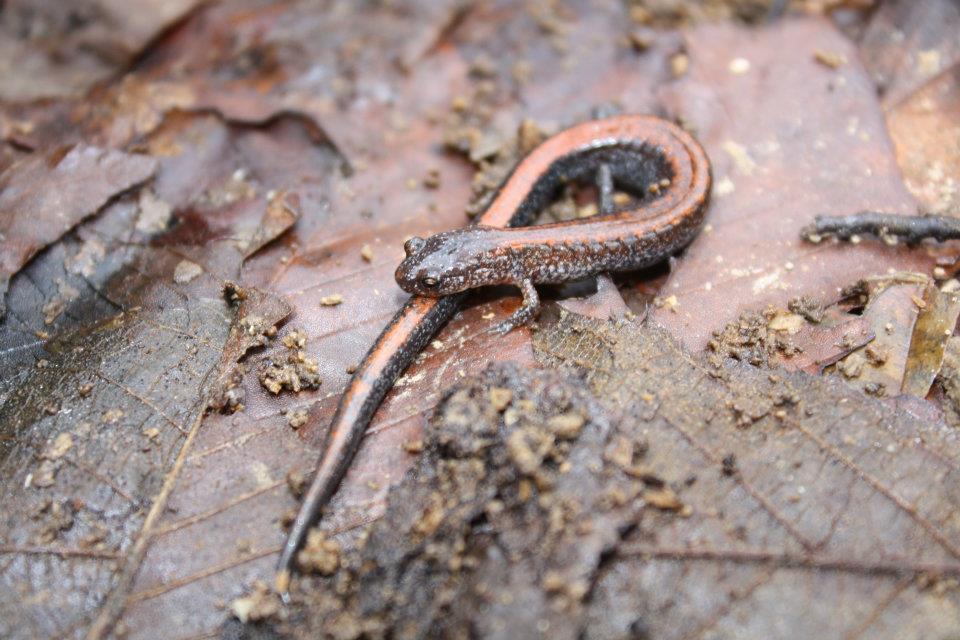
A Red-Backed Salamander that is regrowing its tail. (Photo by ME)


Authors Joe Mitchell and Whit Gibbons write in their book, Salamanders of the Southeast, "All larval and adult salamanders are carnivores; that is they eat other animals. Most adults consume a variety of invertebrates such as insects and their larvae, worms...and other invertebrates. Some salamanders will kill and eat larvae and adults of other species, and some even cannibalize their own kind." 

It's pretty cool and crazy stuff! Lizards' diets vary among species as well. However some are considered omnivores; which eats other animals and plants. Then there are some that are herbivores; which eats only on plants. 


As always, fill free to ask me any questions you have and I hope you have learned something about lizards and salamanders. I will leave you with some more photos. Also, on both the challenges. the salamanders are the top photos and likewise, the lizards are the bottom photos. 


(Photos by ME).


Wednesday, September 30, 2015

Fall Exploration: The Mountains

Hi Friends,

After a few months off from blogging, I am back and I thought it would be neat if we learned about some interesting places to explore in NC as well as a few places in VA during the Fall months. I would recommend checking them out at other times of the year too, but fall can especially be a fun time with the leaves changing color and all. Now, I will not go into real deep detail of these places as I want to encourage you to do some research and exploring for yourself.

Waterfall up in Boone, NC. Photo by ME.


Let's start with NC's mountains! So lets look at the Blue Ridge Parkway.

According to the North Carolina Wildlife Viewing Guide, by Charles E. Roe, "The Blue Ridge Parkway is a 470 mile scenic motorway down the crest of the Blue Ridge Mountains. It passes through an array of habitat types and elevations ranging from 2,000 to over 6,000 feet." Roe also writes that they extend from the Great Smoky Mountains National Park in NC, to the Shenandoah National Park in VA.

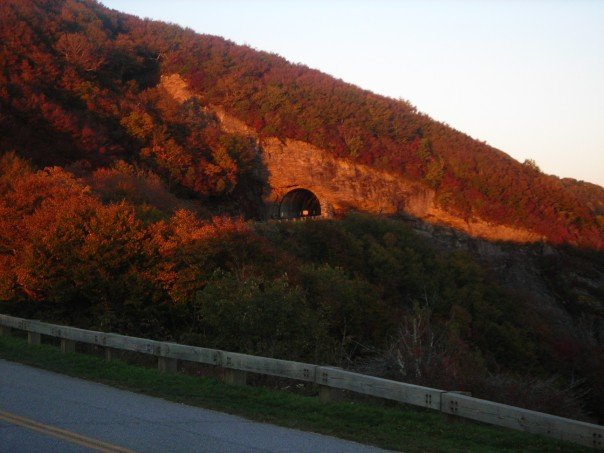
Beautiful sunset in the NC mountains. Photo by ME.

Along the Blue Ridge. Photo by ME.


Along the parkway, are places you can stop and enjoy the view and even check out historic buildings and the like and learn what life in the mountains was like a long time ago. There are some neat places and views to check out.

If your ever up in the parkway in VA, here are a few places that are really neat to explore.

Meadows of Dan, VA.

Located up in Patrick County, VA, and certainly around the mountains, it is a small but neat tourist attraction. This place is the Mabry Mill.


Mabry Mill. Photo by ME.

Photo by ME.


It's construction dates back to 1903 and the use of it started in 1910 as a gristmill. Today tourists can look around and learn about what life in the region was like, There is a restaurant and also a black smith shop ( inside of it is pictured below. Photo by ME.) you can look at. The mill had originally started off as a black smith shop. (wikipedia).

It is an interesting place to check out.


The next place, is what you could certainly exclaim "Sweet!" Be sure to check out Nancy's Candy Company.


This place is amazing! The lady who owns it, of course is named Nancy. This place makes home made fudge and truffles as well as other goodies. They offer various candies too.  Pictured below are some of their truffles, so good! I apologize if this blog makes your mouth water.

Photo by ME.


Truffles! 

So yeah, go to this place if you love chocolate!

Of course in that and around Fancy Gap, VA area, there are some pretty views of the mountains!
Photo by ME.


One final note on this region of VA, there is a great winery called Chateau Morrisette, located in Floyd, VA. It is great! Really neat atmosphere and great wines. Would highly recommend if your a wine consumer.
Chateau Morrisette Winery. Photo from Internet. 


Ok, now lets get back to more nature related exploration in the mountains.

A really neat place you might not have heard of, that I would highly recommend checking out is the Crabtree Meadows Park and Waterfall. This is on the Blue Ridge Parkway in NC, near the Asheville area.

Crabtree Falls. Photo by ME. 

Crabtree Falls. Photo by ME.


As you can see, the Crabtree  Meadows Park and Falls has a spectacular and massive waterfall. According to http://www.hikewnc.info/besthikes/blue-ridge-parkway-section-3/crabtree-falls.  This trail "descends on a moderate path to a majestic 70' waterfall, which is widely touted as one of the most photogenic in the area. You'll climb steeply up the opposite ridge for a short distance, then hike a wide, smooth trail beside the stream."

The trail certainly does get steep, so prepare accordingly when you visit. It is a fun place to hangout at and explore.

Another cool place to go is the Linville Gorge, Falls, and Caverns.


Linville Falls 


Linville Falls. Photo by ME. 


In describing the Linville Gorge and Falls, Charles E. Roe,author of North Carolina Wildlife Viewing Guide, writes: "In this national wilderness area, the Linville River plunges ninety feet as it enters the deepest gorge in eastern America."

There are few trails here and as you can see, some pretty scenery and waterfalls.  The Linville Caverns are pretty neat too as it is the "largest limestone cave in state, with interesting cave fauna." (Roe)

Pictured below is the Linville Caverns. Photo from Internet.


Image result for linville caverns


I honestly could keep going on about the cool places to explore in the NC and VA mountains, since those are locations I am focusing on in this blog.

A final place I want to touch on is a bit more "wilderness" like. This place is the Pisgah National Forest.

Photo by ME. 

The Pisgah National Forest is a super cool area to explore; some of the places I have talked about are located in or around this forest. You may have heard of the Mitchell Mountain and the Black Mountains; they are along this forest too, it is big.

A friend and I use to, when we were in college, would take a couple days over fall break and go camping in the Pisgah and spend time exploring. We would explore streams like the one pictured below, drive around and stop at certain viewing points to see the mountains. It was awesome!

Beautiful Stream in NC Mountains. Photo by ME.


The really cool thing about not only the Pisgah, but all of the NC mountains is the diversity of wildlife and plants! Salamanders in particular, are quite abundant there.

According to Salamanders of The Southeast, authors Joe Mitchell and Whit Gibbons writes: "...the salamanders found in the Southeast constitute 17 percent of the world total of 578 known species recognized in early 2009....More salamander species live in the tropics than in temperate North America, but more major groups (families and genera) are found in the Southeast than anywhere else." A lot of those are found here in NC.

Spring Salamander found near a spring. Photo by ME.

Yonahlosse Salamander. Photo by ME.


So, I hope you learn about some neat places to check out the mountains. Fall is a great time to go, the leaves are changing color and the scenery is breathtaking. Some other places you might want to go include: Grandfather Mountain, Mount Mitchell and the Black Mountains, the Great Smoky Mountains National Park, and Hanging Rock. I would encourage you to look into other places and look for an adventure in mountains over this fall season. Again, feel free to ask me any questions you might have,

I will leave you with some more mountain photos.

Colorful Leaves Near A Stream. Photo by ME.

The view is amazing! Photo by ME. 

NC Mountains